
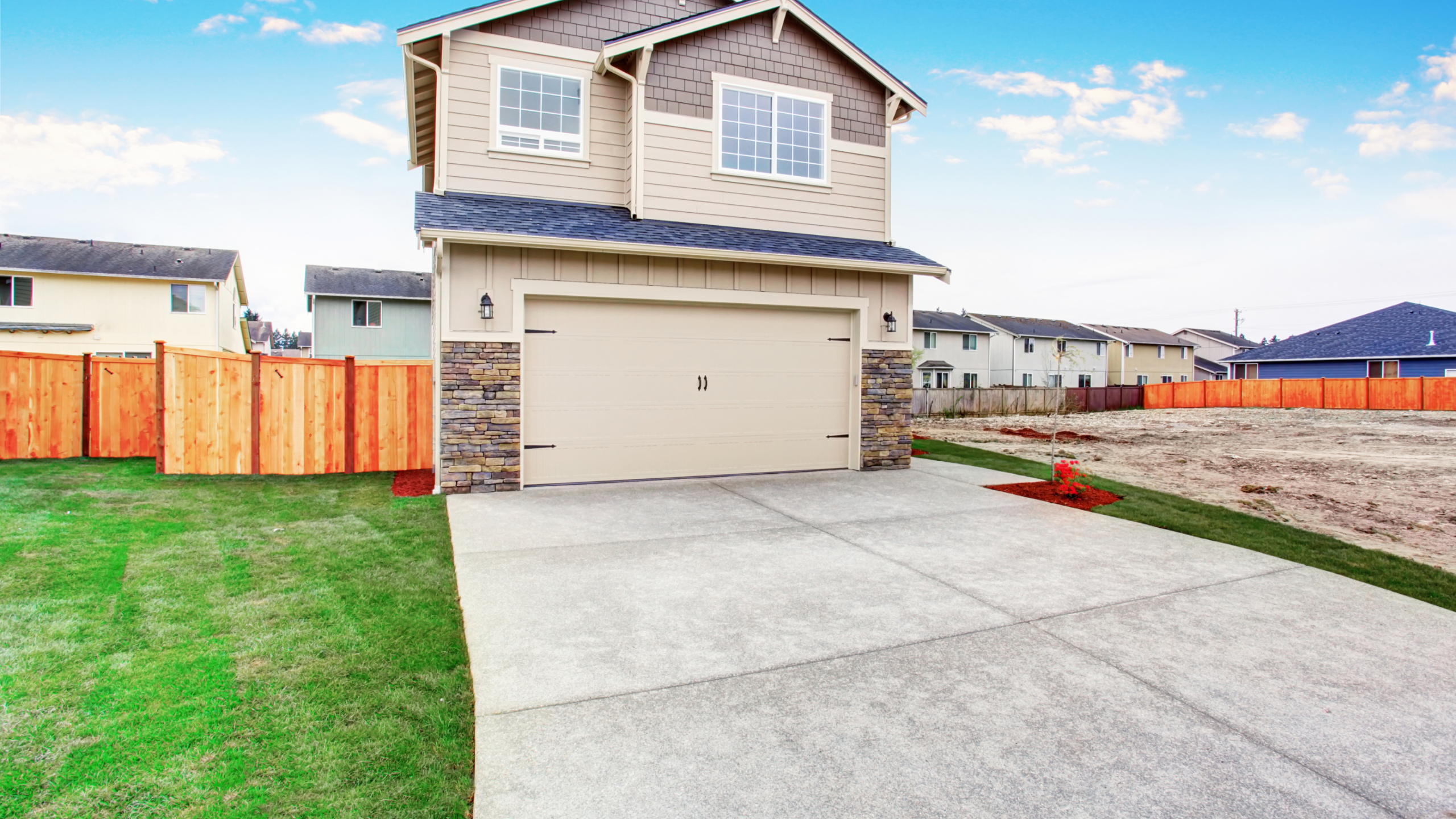
Concrete driveways are designed to last for decades, but over time, wear and damage can develop from weather exposure, vehicle traffic, soil movement, and drainage issues. The challenge for many homeowners is determining whether the driveway should be repaired, resurfaced, or completely replaced.
Some problems are cosmetic and relatively simple to address. Others point to deeper structural issues beneath the surface. Understanding the difference helps homeowners make practical decisions that avoid unnecessary costs while protecting the long-term condition of the driveway.
This guide explains the most common types of driveway damage, what causes them, and when repair, resurfacing, or replacement makes the most sense.
Common Concrete Driveway Problems
Concrete naturally changes over time. Minor wear is expected, but certain types of damage can signal larger issues.
Cracks
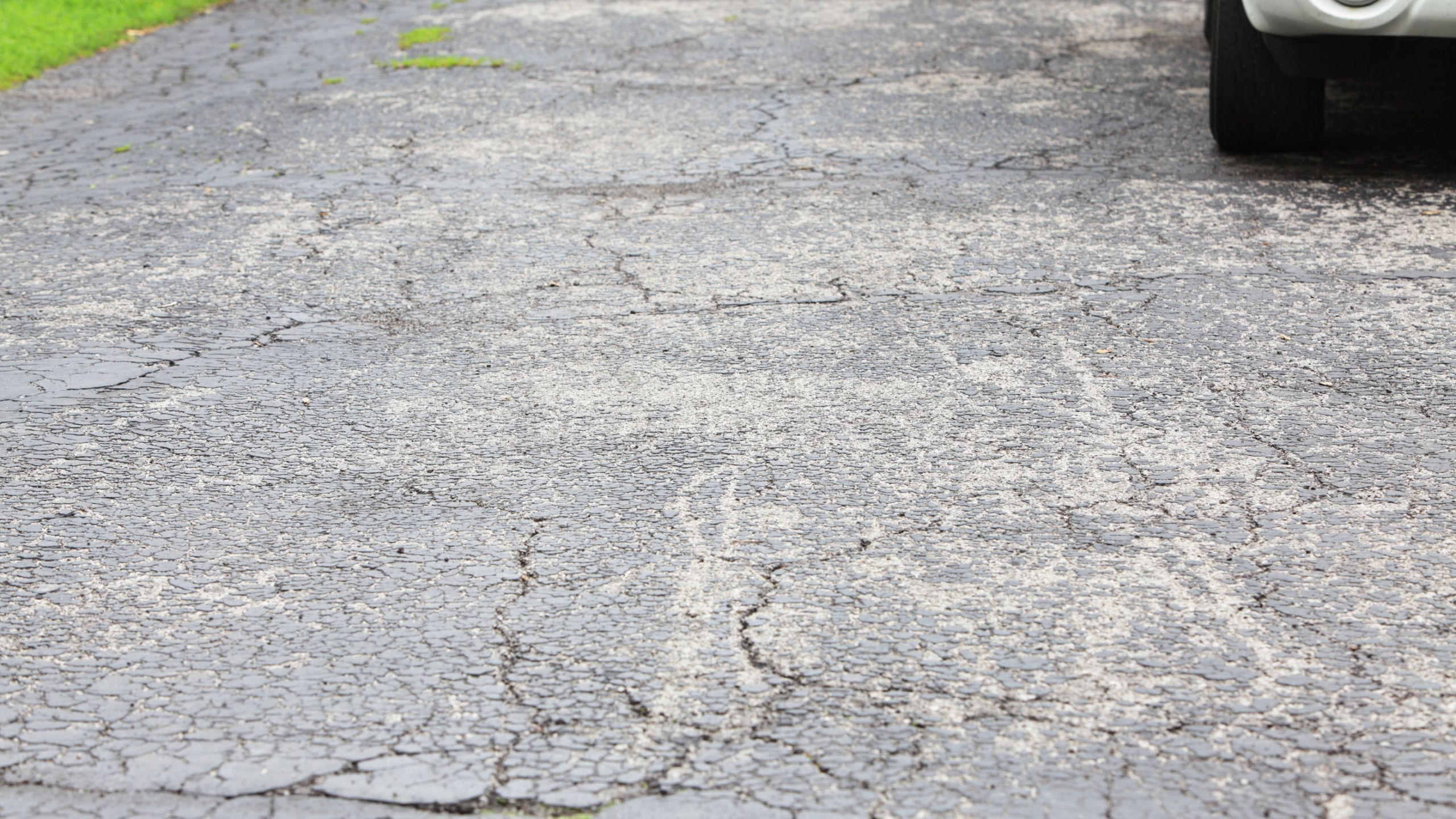
Cracking is the most common concrete driveway problem. Some cracks are minor and cosmetic, while others indicate movement beneath the slab.
Hairline Cracks
Hairline cracks are small surface-level cracks that usually develop from:
- Shrinkage during curing
- Minor temperature changes
- Natural aging
These are common and often manageable with simple repairs.
Larger Structural Cracks
Wider cracks may develop from:
- Soil movement
- Poor base preparation
- Heavy vehicle loads
- Drainage problems
When cracks continue widening or spread across multiple sections, deeper structural problems may exist.
Surface Scaling and Flaking
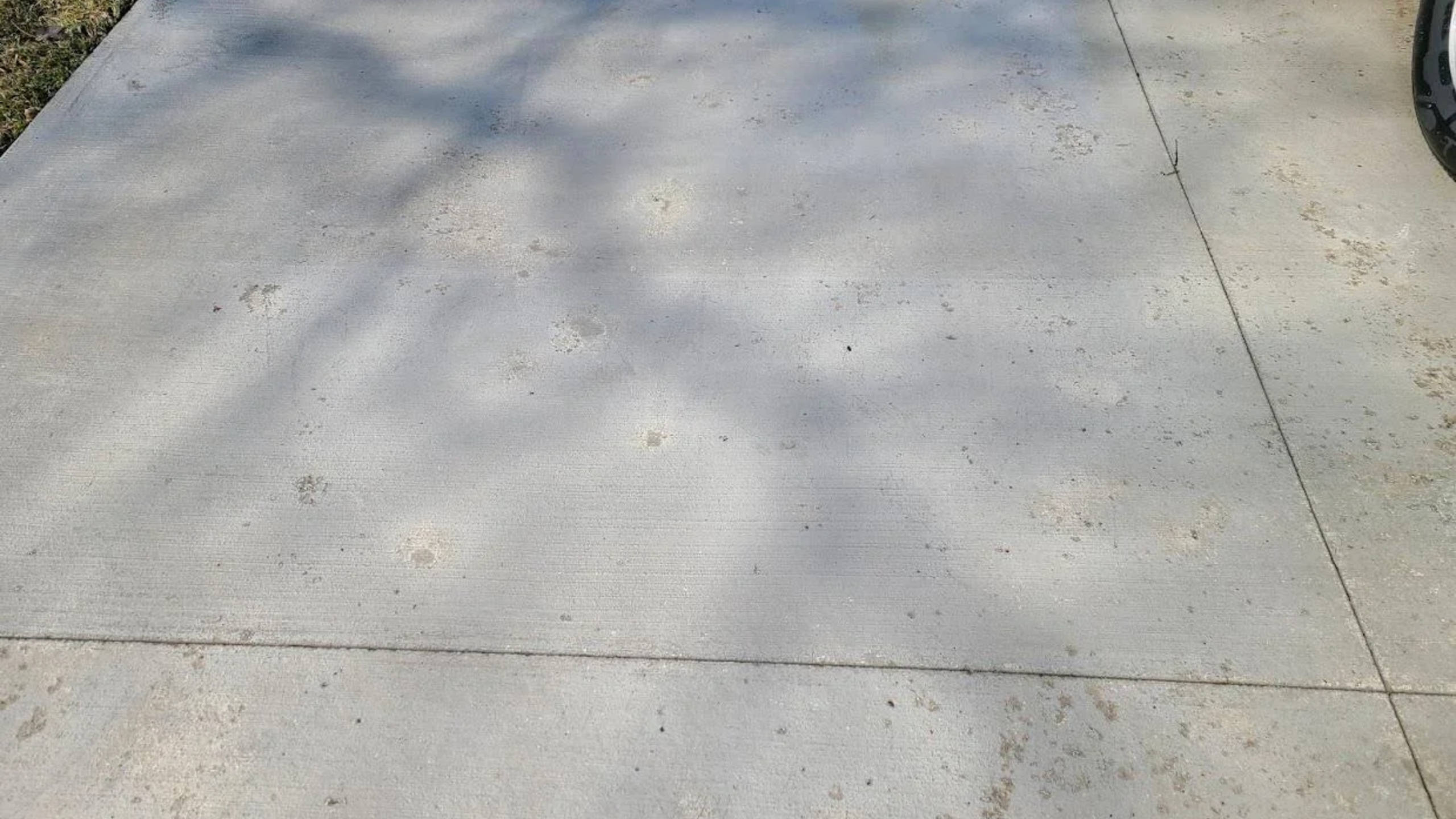
Scaling occurs when the top surface begins to peel or flake away.
This is commonly caused by:
- Freeze-thaw cycles
- Improper finishing during installation
- De-icing chemicals
- Poor curing practices
Surface scaling can affect both appearance and long-term durability if left untreated.
Uneven or Sunken Sections
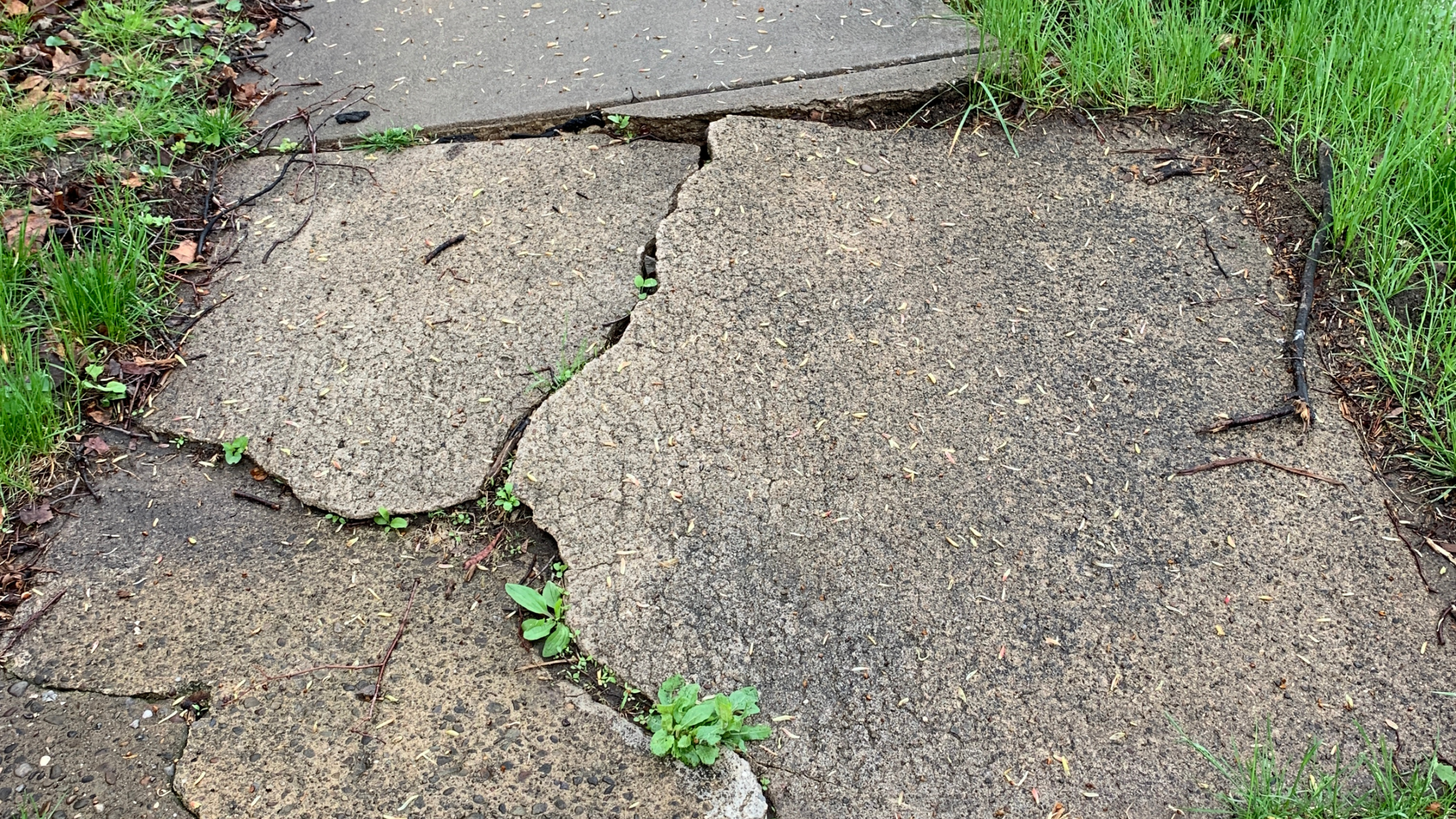
Driveways may begin to sink or settle unevenly due to:
- Soil erosion beneath the slab
- Improper compaction
- Water intrusion under the concrete
Uneven sections can create drainage issues and become safety hazards over time.
Stains and Surface Discoloration
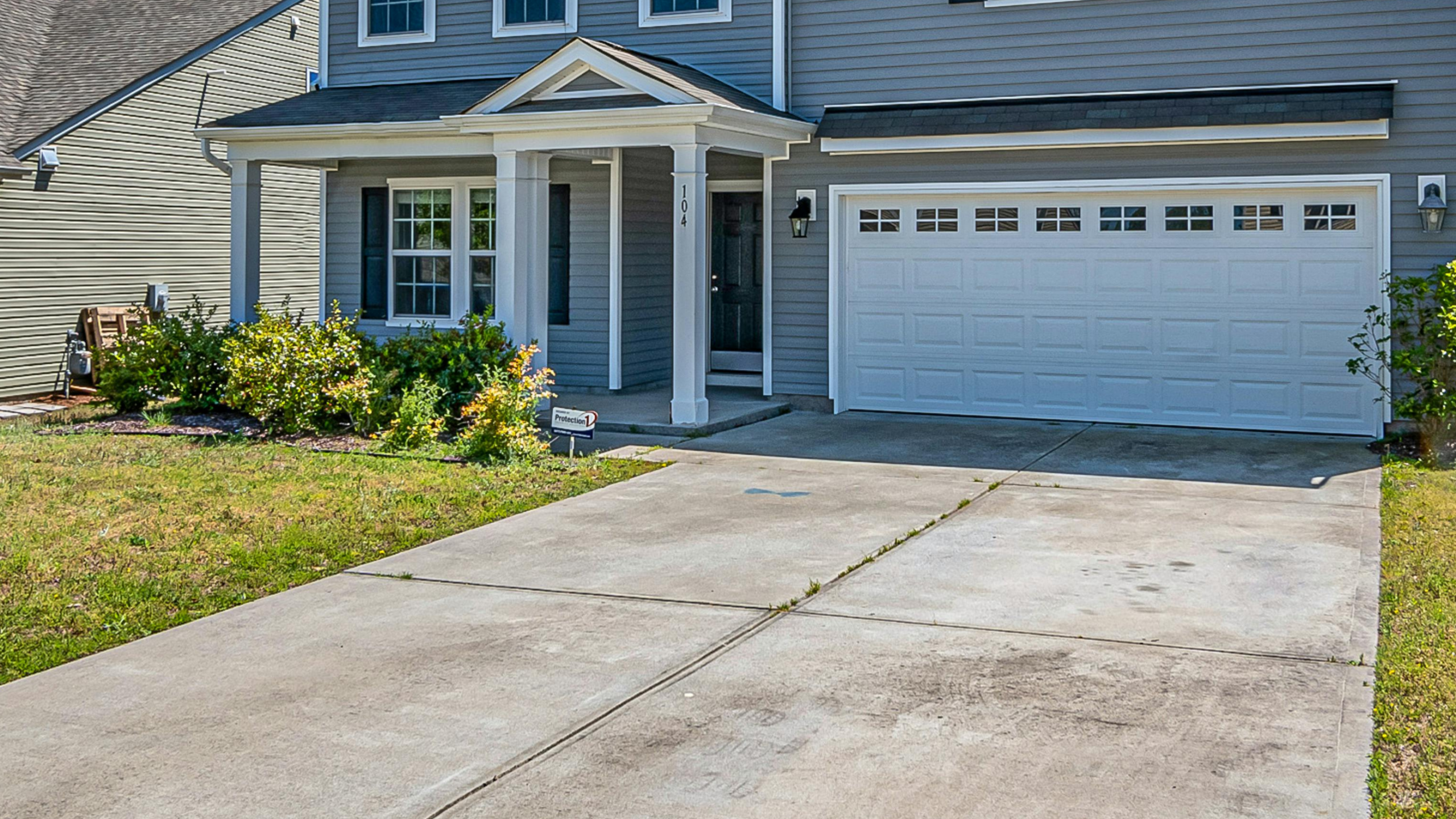
Oil stains, rust marks, and discoloration are usually cosmetic issues, but they can still affect curb appeal. In some cases, resurfacing may improve the appearance without requiring full replacement.
What Causes Concrete Driveway Damage?
Understanding the cause of damage helps determine the right repair approach.
Poor Base Preparation
A driveway depends heavily on the stability of the base beneath it. If the subgrade was not properly compacted during installation, the concrete may shift or crack as the soil settles over time.
Drainage Problems
Water is one of the biggest threats to concrete driveways. Poor drainage can lead to:
- Erosion beneath the slab
- Freeze-thaw damage
- Surface cracking
- Uneven settling
Proper grading and water management are essential for long-term performance.
Heavy Vehicle Loads
Driveways designed for standard residential vehicles may crack under repeated heavy loads from:
- RVs
- Trailers
- Delivery trucks
- Construction equipment
Concrete thickness and reinforcement must match the intended use.
Weather Exposure
Concrete expands and contracts with temperature changes. Over time, this movement can contribute to cracking and surface wear. Harsh winters and repeated freeze-thaw cycles accelerate deterioration when moisture enters the concrete surface.
When Concrete Driveway Repair Makes Sense
Repair is often the best option when the damage is limited and the overall structure of the driveway remains stable.
Situations Where Repair Is Appropriate
Repair is usually effective when:
- Cracks are isolated
- Surface wear is minor
- The slab remains level
- Drainage problems are limited
Small repairs completed early can prevent larger problems from developing later.
Common Concrete Driveway Repairs
Crack Filling and Sealing
Small cracks can often be cleaned and sealed to help prevent moisture intrusion and further expansion.
Surface Patching
Localized damage may be repaired with patching materials designed for concrete surfaces.
Joint Repair
Control joints can deteriorate over time and may require resealing to maintain proper performance.
When handled early, professional concrete repair services can help extend the life of a driveway without the cost of full replacement.
What Is Concrete Driveway Resurfacing?
Resurfacing involves applying a new layer or overlay to the existing concrete surface.
This option improves appearance and addresses surface-level wear while keeping the original slab underneath.
When Resurfacing Is a Good Option
Resurfacing works best when:
- The driveway is structurally stable
- Damage is mostly cosmetic
- Minor cracks are present
- Surface discoloration or scaling exists
It can provide a refreshed appearance without full demolition.
Benefits of Resurfacing
- Lower cost than replacement
- Faster project timeline
- Improved appearance
- Ability to add decorative finishes
Resurfacing can also allow homeowners to upgrade the look of older concrete surfaces.
For homeowners interested in decorative upgrades, integrating stamped concrete services during resurfacing can improve curb appeal while maintaining the existing slab.
Limitations of Resurfacing
Resurfacing does not solve structural problems beneath the concrete.
If the driveway has:
- Significant settling
- Major cracking
- Base failure
- Drainage problems
the issues will likely continue even after resurfacing.
When Concrete Driveway Replacement Is Necessary
Replacement is often the most practical long-term solution when damage affects the structural integrity of the driveway.
Signs Replacement Is the Better Choice
Replacement is usually recommended when:
- Large cracks spread across multiple sections
- The driveway is uneven or sinking
- Drainage issues are severe
- Surface deterioration is widespread
- Previous repairs continue failing
In these situations, replacing the driveway often provides better long-term value than repeated repairs.
What Happens During Driveway Replacement?
A full replacement project typically includes:
- Demolition and removal of old concrete
- Excavation and base preparation
- Reinforcement installation
- New concrete placement and finishing
- Proper curing
Proper preparation is one of the most important parts of the process.
Working with a contractor experienced in concrete driveway installation helps ensure the new driveway is built with correct thickness, reinforcement, and drainage considerations.
Cost Comparison: Repair vs Resurfacing vs Replacement
The right solution often depends on balancing condition and budget.
Average Cost Comparison
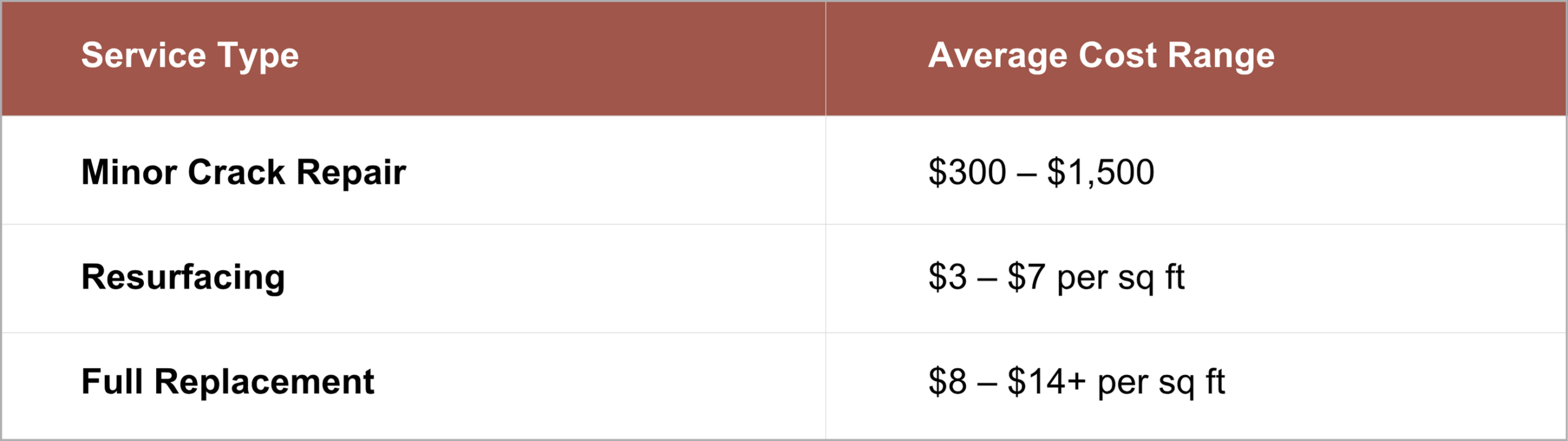
While replacement has the highest upfront cost, it may reduce future repair expenses when structural issues are severe.
How Long Do Repairs and Resurfacing Last?
Longevity depends on the condition of the existing driveway and the quality of the work performed.
Expected Lifespan by Solution
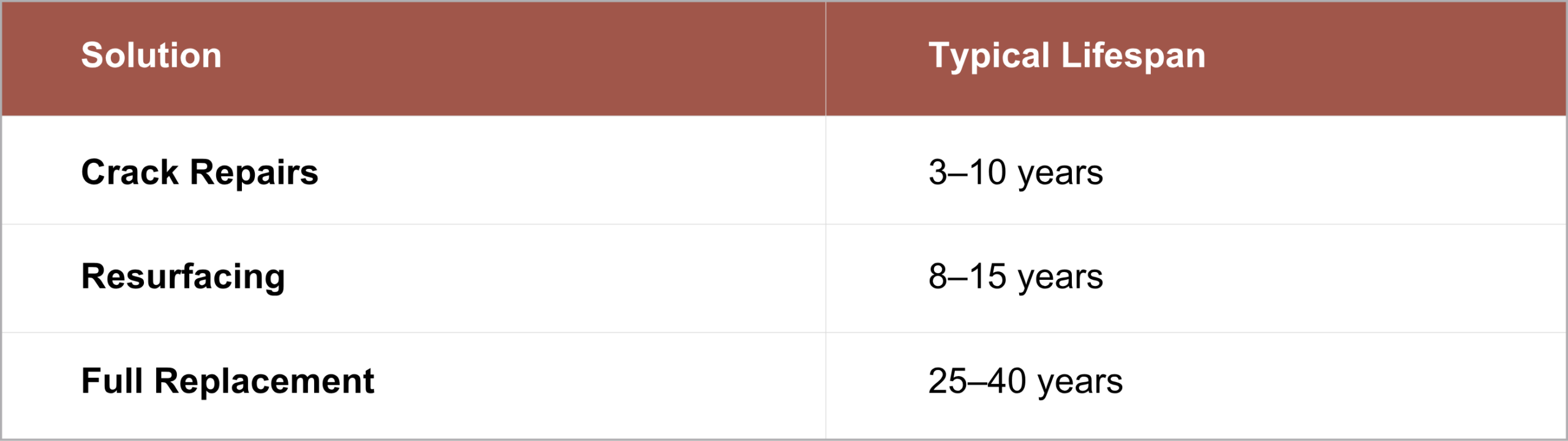
Resurfacing and repairs can extend the life of a driveway significantly when the base remains stable. For a full breakdown of lifespan expectations, this concrete driveway guide explains the factors that affect long-term durability.
How to Prevent Future Driveway Damage
Preventive maintenance helps reduce the likelihood of major repairs.
Best Practices
- Address cracks early
- Keep drainage areas clear
- Avoid harsh de-icing chemicals
- Seal the surface when appropriate
- Avoid excessive heavy loads on thin slabs
Small maintenance steps often prevent larger structural issues.
Choosing the Right Contractor for Driveway Repairs
Not all driveway problems require the same solution. A proper evaluation should focus on the condition of the slab, the stability of the base, and the cause of the damage.
A contractor should explain:
- Whether the issue is cosmetic or structural
- If repairs are likely to last
- Whether resurfacing is practical
- When replacement is the better investment
The goal is to recommend the most practical long-term solution, not simply the quickest fix.
Planning Your Concrete Driveway Project
Concrete driveway damage can range from minor cosmetic wear to major structural failure. Understanding the difference helps homeowners make informed decisions and avoid unnecessary expenses.
Top Tier Construction works with homeowners and property owners to evaluate driveway conditions and recommend practical solutions based on the actual cause of the damage.
Whether the project involves repairs, resurfacing, or full replacement, Top Tier Construction focuses on proper preparation, drainage, and long-term performance to help ensure the driveway continues performing reliably over time.