
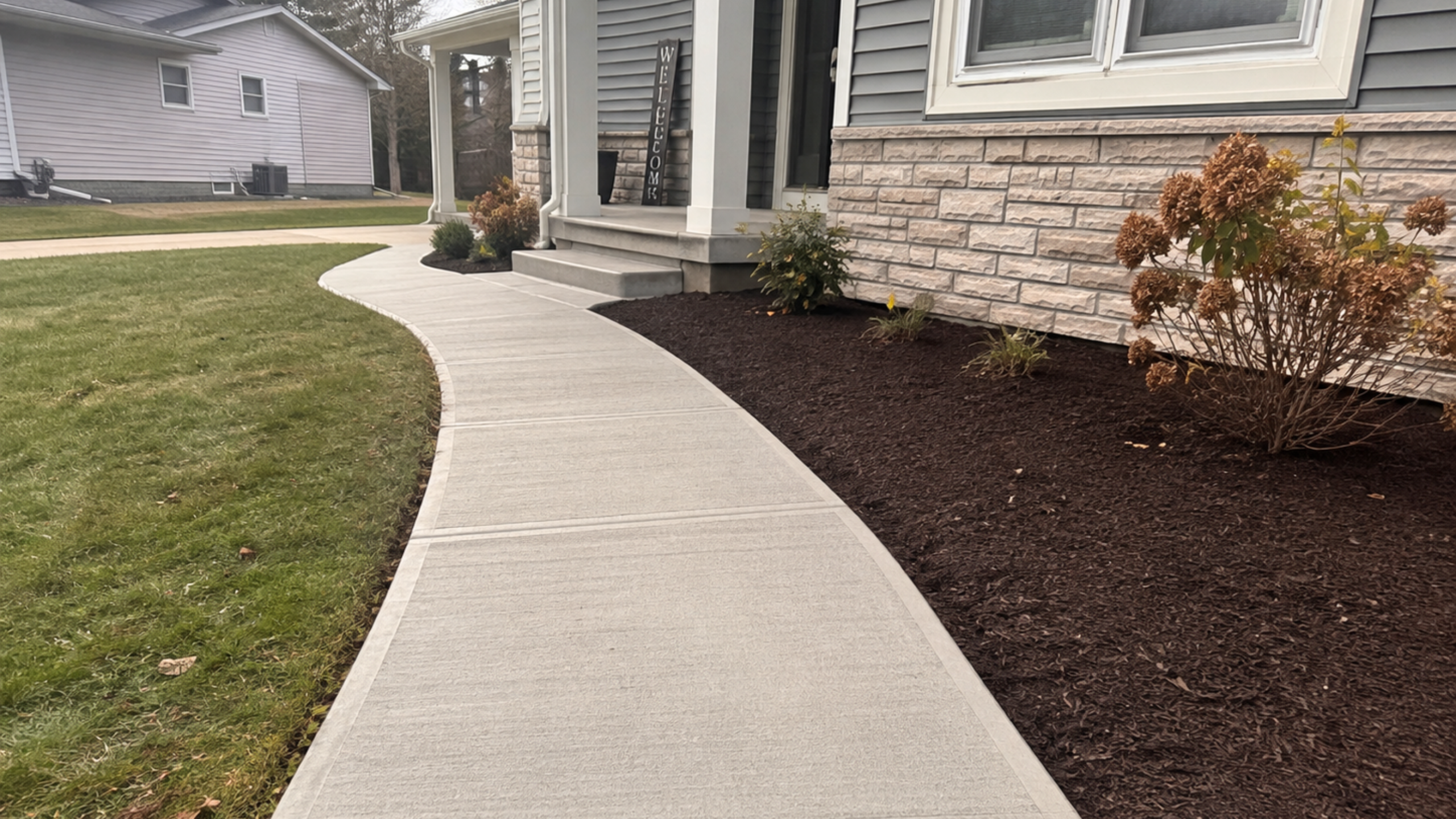
A new concrete walkway can make it easier to move between your driveway, front entrance, backyard, patio, or other areas of your property. If you are planning one in Central Iowa, understanding the average concrete walkway cost in Des Moines is only part of the decision. Homeowners should also consider site preparation, drainage, finish options, winter performance, and whether the project involves a private walkway or a public sidewalk.
For many residential projects in the Des Moines area, professionally installed concrete walkways can fall around $10 to $18 or more per square foot depending on the finish, site conditions, demolition requirements, and design. Smaller or straightforward projects may fall below that range, while stamped concrete, difficult excavation, and custom layouts can increase the total.
This guide explains the costs and practical decisions homeowners should understand before installing or replacing a concrete walkway or sidewalk in Des Moines.
Average Concrete Walkway Cost in Des Moines
Concrete walkway pricing is typically based on square footage, but contractors also consider the amount of preparation and labor required to complete the project.
For planning purposes, standard residential walkways often fall near the lower end of the pricing range, while decorative or complicated installations cost more
Concrete Walkway Cost by Finish
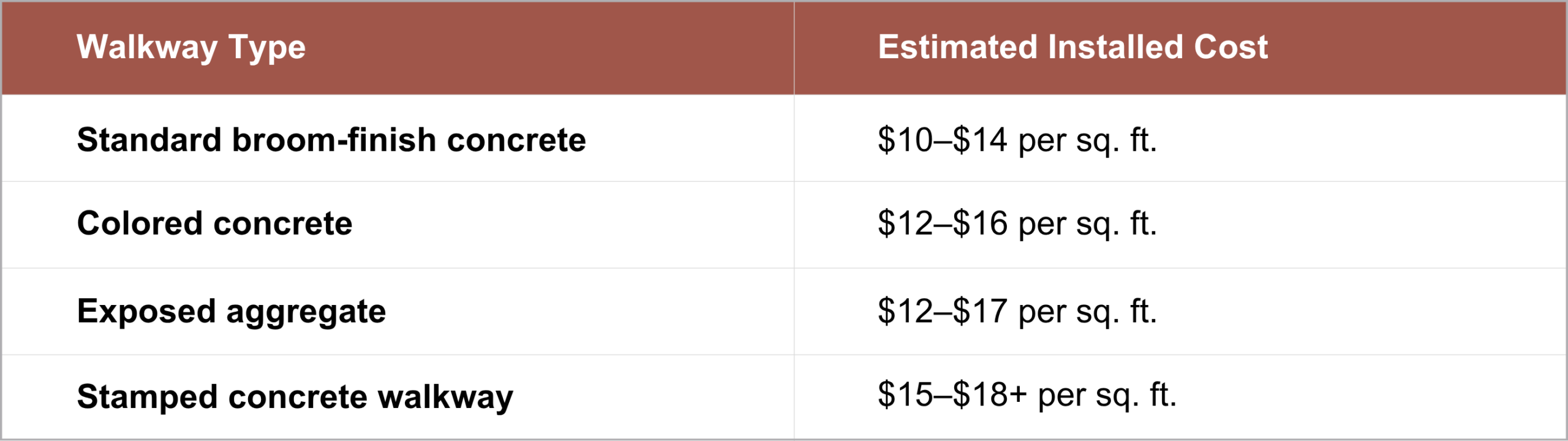
These are general planning ranges rather than fixed quotes. A contractor needs to see the site to determine excavation, access, grading, demolition, and base requirements.
A simple 4-foot-wide walkway connecting a driveway to a front door may be relatively straightforward. A curved garden path with stamped concrete, several elevation changes, or an existing slab that must be removed will require more work.
What Affects Concrete Walkway Cost?
Square footage gives you a starting number, but it does not explain why two similar-looking walkway projects can receive different estimates.
Excavation and Subgrade Preparation
A walkway needs stable ground beneath it. If the existing soil is soft, disturbed, poorly draining, or uneven, additional excavation may be necessary.
The contractor may need to remove unsuitable material, establish the correct grade, install aggregate base, and compact the area before concrete is placed.
That preparation matters in Central Iowa because seasonal moisture and freezing conditions can put pressure on exterior flatwork. A weak base can allow individual sections to move, settle, or heave over time.
Existing Concrete Removal
Replacing an old walkway costs more than installing concrete in a prepared open area.
Removal can involve:
- Breaking and removing existing slabs
- Loading and hauling concrete debris
- Removing failed base material
- Correcting the grade before the new walkway is formed
If only a few panels are damaged, replacement may be limited to those areas. Widespread settlement or cracking may make a larger replacement more practical.
Walkway Width and Length
Longer and wider walkways require more concrete and base material, but very small projects are not always inexpensive on a per-square-foot basis.
Concrete contractors still have equipment, transportation, setup, forming, and labor costs even when the pour is relatively small. This is why a short walkway may carry a higher per-square-foot price than a larger straightforward project.
Straight vs. Curved Layouts
A straight walkway is generally easier to form and finish. Curves can create a more natural connection between landscaping, patios, and entrances, but they require additional forming and layout work.
The design difference may be worthwhile in highly visible areas, especially for a front walkway where the path contributes to the overall appearance of the home.
Concrete Finish
A broom finish is one of the most practical and cost-effective choices for exterior walkways. Decorative options increase labor and material costs. Stamped patterns, integral color, exposed aggregate, and decorative borders all require additional steps.
Homeowners who want the walkway to become part of the landscape design rather than simply a path may find the added cost worthwhile.
Concrete Walkway vs. Sidewalk: What Is the Difference?
The terms walkway and sidewalk are often used interchangeably, but the location of the concrete matters.
A private concrete walkway typically sits completely within your property. It might connect:
- A driveway to the front door
- A patio to a side entrance
- The front yard to the backyard
- A garage to another structure
- Different outdoor living areas
A public sidewalk generally runs along the street within the public right-of-way and provides pedestrian access through the neighborhood.
That distinction becomes important when permits and city standards are involved.
Top Tier Construction provides concrete sidewalks and walkways for residential and commercial properties throughout the Des Moines area, including new installations and replacement work.
Do You Need a Permit for a Concrete Sidewalk in Des Moines?
If you are replacing or constructing a public sidewalk in Des Moines, permit requirements need to be checked before work begins.
Des Moines municipal code requires a permit for constructing, reconstructing, or removing sidewalks. Public sidewalk work must also follow applicable city standards and specifications.
A private walkway located entirely on your property may be treated differently from sidewalk work performed within the public right-of-way. Requirements can also change when a project connects with a driveway approach, curb, street, or other public infrastructure.
Because regulations can change, homeowners should confirm current requirements with the City of Des Moines before construction.
Who Is Responsible for Maintaining the Public Sidewalk?
In Des Moines, owners of property abutting a public sidewalk are generally responsible for maintaining that sidewalk in a safe state of repair.
This can become important when panels crack, heave, settle, or otherwise create unsafe walking conditions.
If you receive a city notice concerning a sidewalk defect, do not treat the project exactly like a private backyard walkway. The replacement may need to meet specific public sidewalk requirements.
What About West Des Moines and Other Nearby Cities?
Top Tier Construction also works throughout communities surrounding Des Moines, but municipalities may have their own rules.
West Des Moines, Ankeny, Urbandale, Waukee, Johnston, and other Central Iowa communities may use different permitting procedures, inspection requirements, or sidewalk standards.
Always check requirements for the municipality where the property is located rather than assuming Des Moines rules apply everywhere.
How Iowa Weather Affects Concrete Walkways
Concrete walkways in Des Moines need to perform through hot summers, cold winters, rain, snow, ice, and repeated temperature changes.
Those conditions make several installation details especially important.
A Stable Compacted Base
Concrete performs best when the material beneath it provides consistent support. Poor compaction can allow one section to settle while another remains in place. The result may be uneven panels, cracks, or areas that collect water.
Air-Entrained Exterior Concrete
Exterior concrete used in freeze-thaw environments is commonly designed with microscopic air pockets that provide space for freezing water to expand. The appropriate concrete mix should be selected for exterior exposure and local conditions rather than treating a walkway like an interior floor slab.
Proper Drainage
Water should not repeatedly collect along the edges of the walkway or remain beneath the slab. The walkway needs to be graded to manage runoff while still providing a comfortable walking surface.
Drainage deserves special attention when the path is near a foundation, downspout, low area of the yard, or landscaping bed that regularly holds water.
Correct Joint Placement
Concrete naturally shrinks and moves. Control joints create planned locations where cracking can occur rather than allowing random cracks to form wherever the slab is weakest. Joint spacing and layout should make sense for the dimensions and shape of the walkway.
For homeowners deciding when to schedule exterior flatwork, Top Tier Construction’s guide to the best time to pour concrete in Central Iowa explains how seasonal conditions affect pouring and curing.
How Wide Should a Residential Concrete Walkway Be?
Walkway width should be based on how people will actually use the space. A narrow path may save concrete but feel uncomfortable once two people try to walk side by side or someone carries groceries, packages, or outdoor equipment.
Front Entry Walkways
Front walkways usually benefit from more width because they serve as the primary pedestrian entrance to the home. A wider entrance can also better match the scale of the driveway, porch, and front elevation.
Side-Yard Walkways
Side-yard paths can often be narrower because they mainly provide access between the front and back of the property. However, homeowners should think about trash bins, lawn equipment, wheelbarrows, and other items that may need to travel through the space.
Garden and Backyard Paths
These walkways allow more flexibility. Curves can work well around landscaping, while a straight design may make sense when connecting a patio, garage, gate, or outdoor structure. The goal is to create enough space for comfortable use without installing unnecessary square footage.
Concrete Walkway Design Options
A concrete walkway does not have to look like a basic strip of gray concrete. The right finish depends on where the walkway is located, how much traction is needed, and how much maintenance the homeowner wants.
Broom-Finish Concrete
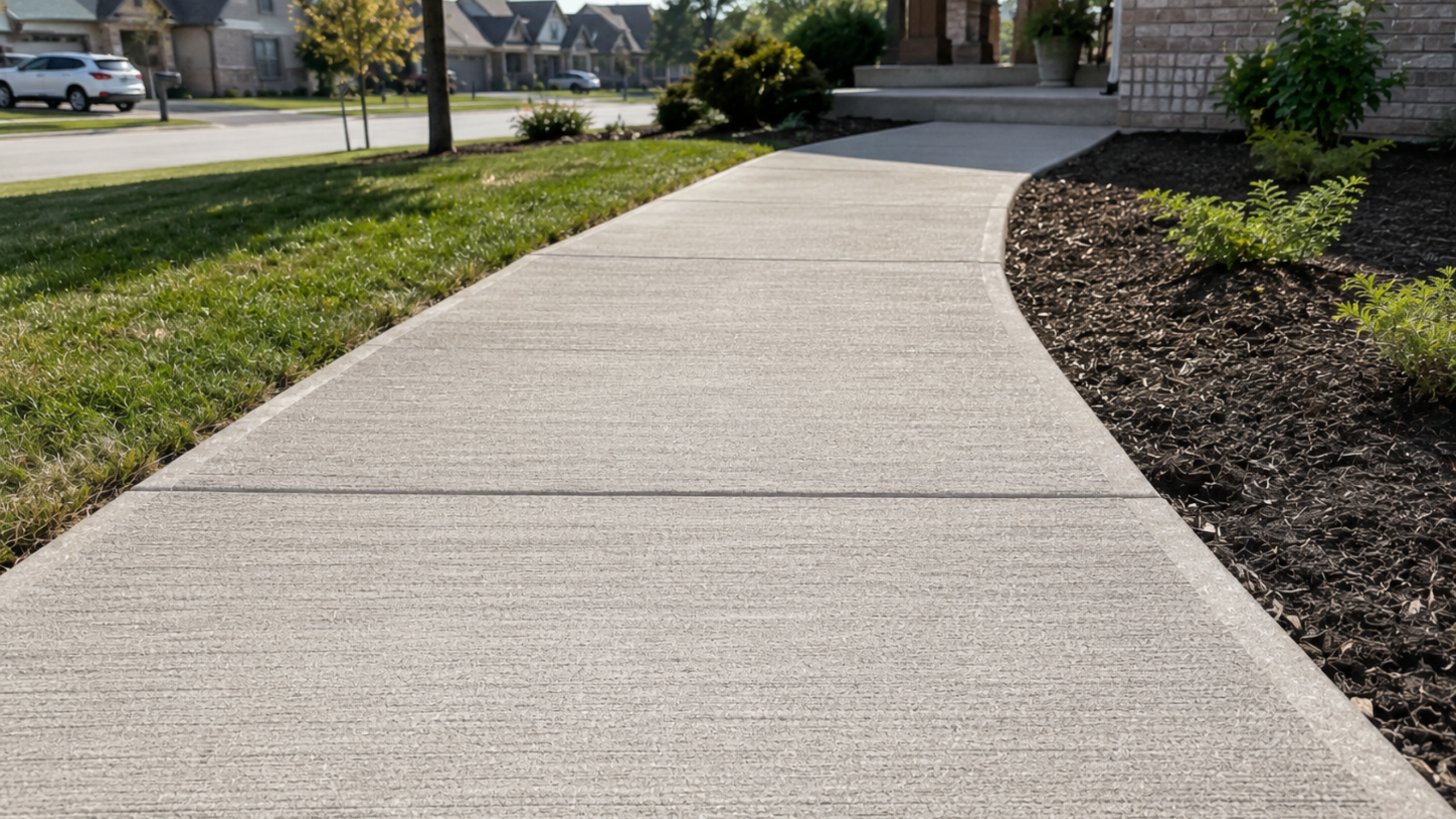
A broom finish creates fine texture across the surface. It is a common choice for sidewalks and walkways because it provides traction, works with many home styles, and keeps installation costs relatively straightforward.
For a public sidewalk, a standard finish may also make more sense than decorative concrete because the priority is safe pedestrian access and conformity with nearby sidewalk sections.
Stamped Concrete
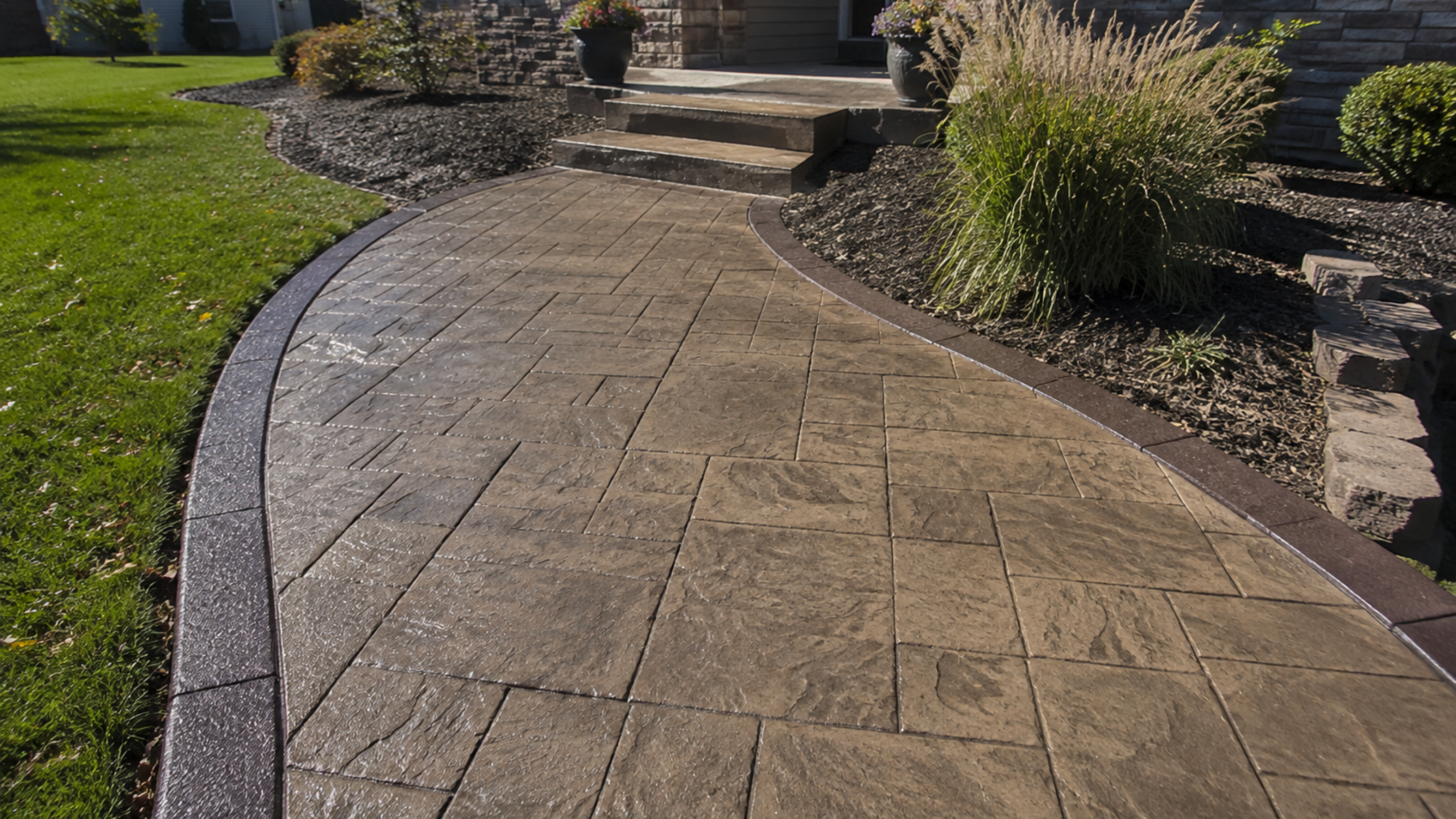
Stamped concrete can resemble stone, slate, brick, or other materials. It works particularly well for private front walks, garden paths, and walkways connecting to decorative patios.
Pattern scale is important. A very large stamp can look awkward on a narrow walkway, while smaller stone or running-bond patterns may fit the proportions better.
Colored Concrete
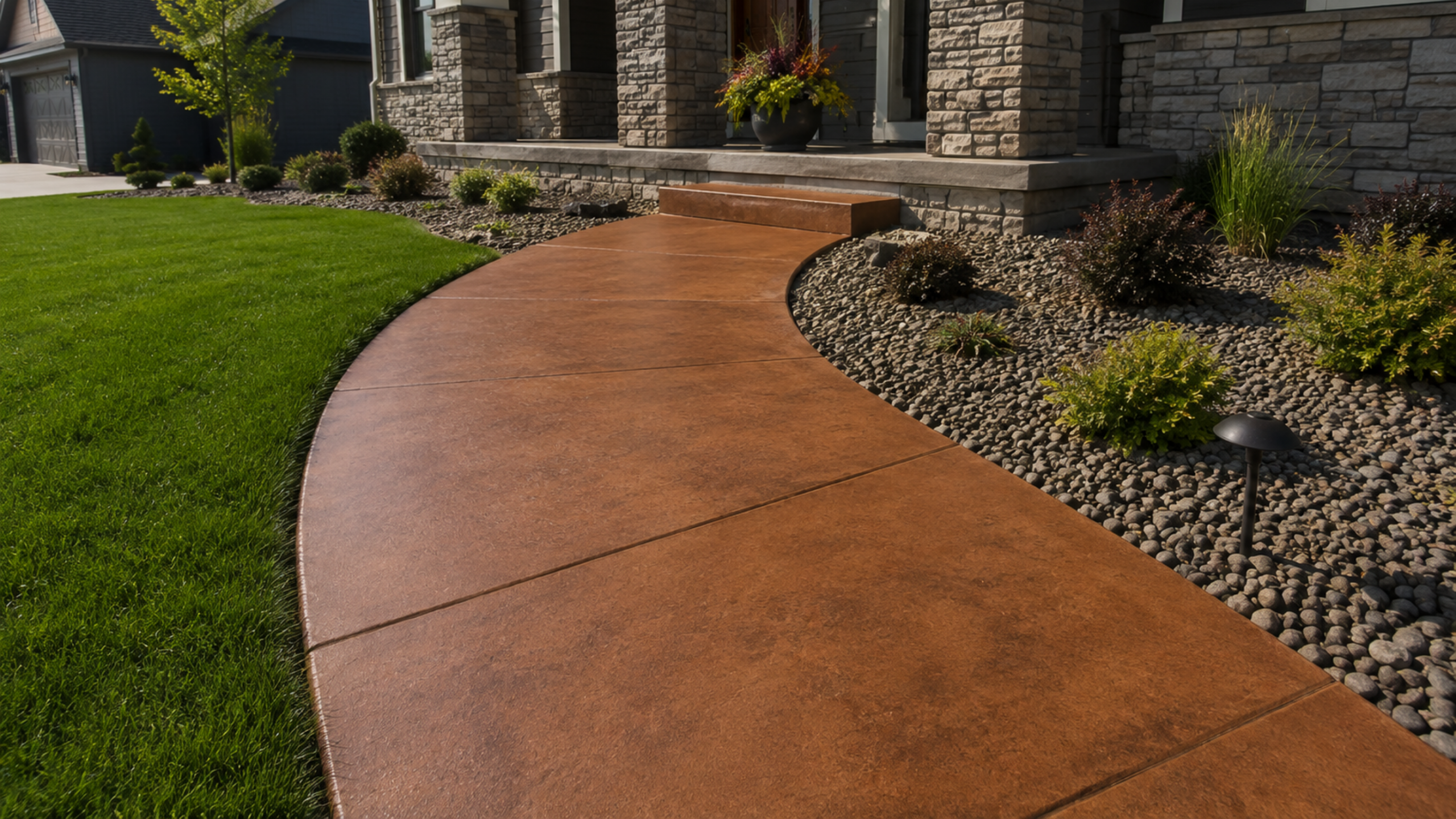
Concrete color can help a walkway coordinate with siding, brick, stone veneer, retaining walls, or other outdoor surfaces. Neutral earth tones often work well because they complement the property without making the walkway visually overwhelming.
Exposed Aggregate
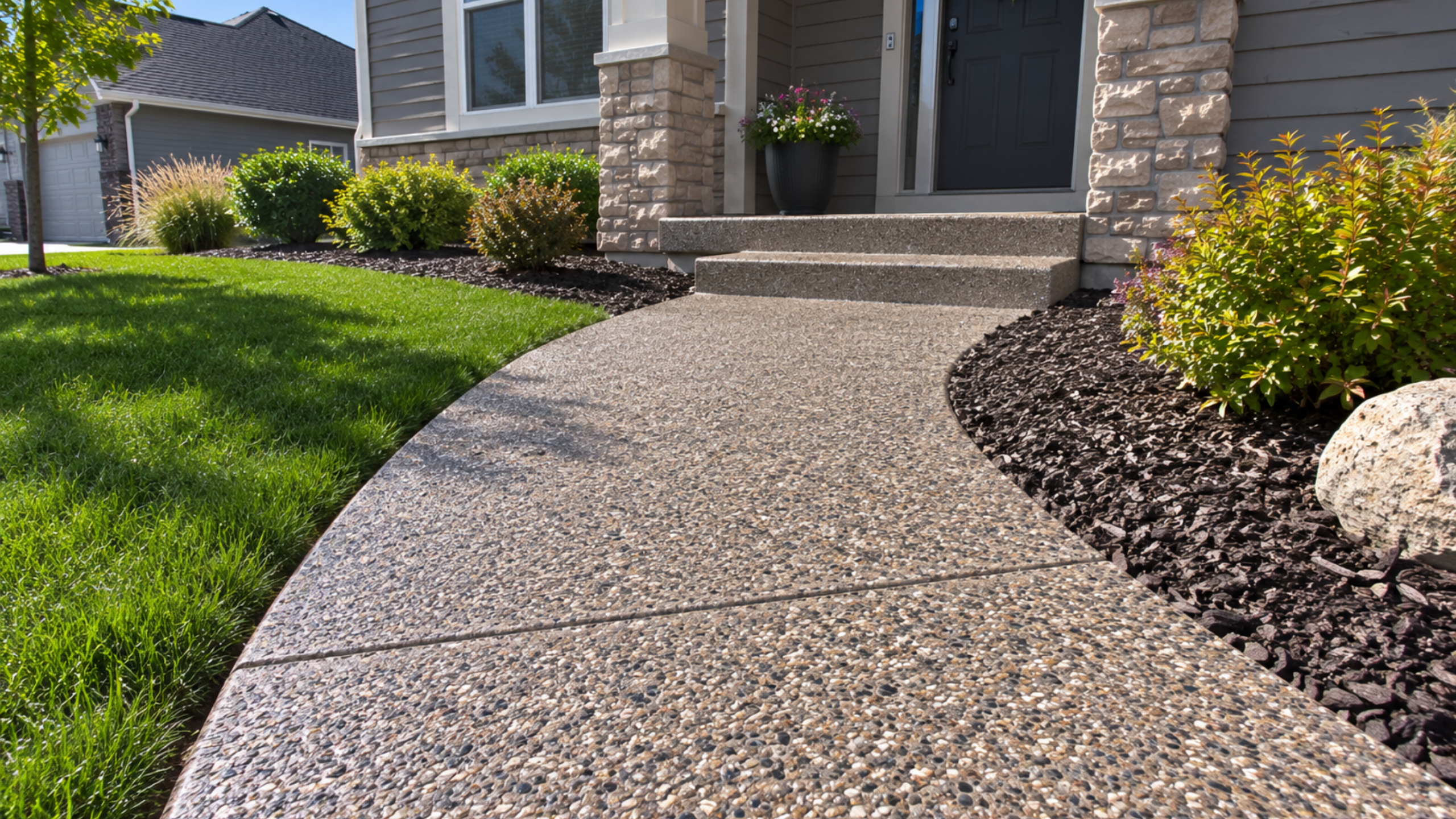
Exposed aggregate reveals some of the stone within the concrete and creates a textured appearance. It can provide a useful middle ground between standard concrete and stamped decorative finishes.
Should Your Walkway Match Your Driveway or Patio?
Not every concrete surface needs to have exactly the same finish. In many properties, consistency works better than exact matching.
For example, a standard driveway may connect to a decorative front walkway. Using a complementary color or border can visually connect the two without adding decorative treatment to the entire driveway.
If your project connects to an aging driveway, it can also be helpful to review the expected driveway replacement cost in Des Moines before completing adjacent concrete. Planning both areas together can prevent having to disturb a newly installed walkway later.
The same principle applies in the backyard. If the path connects directly to a patio, reviewing the concrete patio cost in Des Moines can help you determine whether it makes sense to complete both projects at the same time.
When Should an Existing Concrete Sidewalk Be Replaced?
Not every crack means a sidewalk needs to be removed. Small, stable cracks may remain mainly cosmetic. Replacement becomes more important when the slab no longer provides a level, safe walking surface.
Common signs that replacement should be evaluated include:
- Significant vertical movement between panels
- Large cracks that continue widening
- Multiple broken sections
- Severe settlement
- Heaving caused by soil movement or roots
- Surface deterioration affecting traction
- Drainage problems that cannot be corrected without rebuilding the section
The cause matters as much as the visible damage.
Replacing concrete without addressing unstable soil, drainage, or root pressure can allow the same problem to return.
How Long Does a Concrete Walkway Last?
A properly installed exterior concrete walkway can remain functional for decades.
Actual lifespan depends on:
- Base preparation
- Drainage
- Concrete quality
- Joint placement
- Installation conditions
- Winter exposure
- De-icing practices
- Tree roots and soil movement
A walkway that receives only foot traffic typically experiences much less load than a driveway. That does not mean installation details can be ignored, especially in Iowa’s climate.
Maintaining a Concrete Walkway in Des Moines
Routine maintenance is relatively simple. Keep leaves, soil, and organic debris from accumulating along the surface and joints. Watch for areas where water regularly pools after rain or snowmelt.
Avoid allowing small problems to become larger ones. A changing crack, sinking panel, or area where water is eroding the edge of the slab deserves attention.
During winter, use care with aggressive de-icing chemicals, particularly on newer concrete. Snow and ice management should prioritize safe access without unnecessarily damaging the surface.
Decorative concrete may also need periodic resealing depending on the finish and sealer used.
How Long Does Concrete Walkway Installation Take?
A basic residential walkway is usually a relatively short concrete project, but the full process involves more than the day of the pour.
Typical steps include:
Site Layout and Excavation
The walkway location, width, elevations, and connection points are established before soil is removed.
Base Preparation and Forming
The contractor prepares and compacts the base, establishes the grade, and installs forms.
Concrete Placement
Concrete is placed, leveled, finished, and jointed.
Curing
Fresh concrete needs time to gain strength before regular use.
Weather, project size, demolition, decorative finishes, and municipal inspections can affect the schedule.
What to Look for in a Concrete Walkway Estimate
A useful estimate should explain more than the cost of concrete.
Ask what the project includes, particularly:
- Removal and disposal of existing concrete
- Excavation
- Base material and compaction
- Concrete thickness
- Reinforcement when applicable
- Finish type
- Joint layout
- Grading and drainage
- Cleanup
- Permit responsibility when required
This makes it easier to compare estimates accurately. A low quote can become less attractive if important preparation or disposal work is excluded.
Planning a Walkway With Other Concrete Improvements
Walkways often connect directly to larger concrete surfaces. If you expect to replace your driveway within the next few years, consider how the walkway connection will be handled. The elevation, joint location, and drainage of one surface can affect the other.
Top Tier Construction’s concrete driveway services in Des Moines can be useful when coordinating the walkway with a driveway replacement, extension, or new installation.
Thinking about the entire property layout before pouring individual sections can produce cleaner transitions and reduce the chance of removing newer concrete during a future project.
Frequently Asked Questions
How much does a concrete walkway cost in Des Moines?
A professionally installed concrete walkway in Des Moines may cost around $10 to $18 or more per square foot depending on site preparation, size, access, finish, demolition, and design. A site-specific estimate provides the most accurate price.
Do I need a permit to replace a sidewalk in Des Moines?
Public sidewalk construction, reconstruction, or removal in Des Moines generally requires a permit. Private walkways may be treated differently, so homeowners should confirm current requirements with the city before beginning work.
Who is responsible for repairing the sidewalk in front of a house in Des Moines?
Des Moines code generally requires the owner of property abutting a public sidewalk to maintain that sidewalk in a safe state of repair.
What is the best finish for a concrete walkway?
A broom finish is a practical choice because it provides texture and keeps costs relatively low. Stamped, colored, and exposed aggregate concrete provide more decorative options for private walkways.
How wide should a concrete walkway be?
The ideal width depends on use. Front entrance walks generally benefit from more room for two people to walk comfortably, while side-yard or garden paths can often be narrower.
How long does a concrete walkway last?
A properly installed concrete walkway can last for decades. Base preparation, drainage, joint placement, winter exposure, soil movement, and maintenance all influence its lifespan.
Get an Estimate for a Concrete Walkway or Sidewalk in Des Moines
Concrete walkway cost in Des Moines depends on the size of the path, finish, site access, excavation needs, drainage, and whether existing concrete must be removed. Public sidewalk projects can also involve city requirements that do not apply to private walkways.
The best way to establish a realistic budget is to evaluate the property itself rather than relying only on a square-foot estimate.
Top Tier Construction installs and replaces concrete sidewalks and walkways throughout Des Moines and surrounding Central Iowa communities. If you are planning a front walkway, backyard path, public sidewalk replacement, or a walkway that connects with another concrete surface, contact Top Tier Construction to discuss the project and request a free estimate.