
A concrete patio is one of the most practical ways to improve an outdoor space, but most homeowners want to understand the cost before starting the project. In Des Moines, IA, concrete patio cost can vary based on patio size, site conditions, finish type, drainage needs, and the amount of preparation required before pouring.
For most residential projects, a standard concrete patio costs less than a custom stamped or colored patio. However, the lowest price is not always the best long-term value. A patio that is properly graded, reinforced, finished, and cured will usually perform better over time and require fewer repairs.
This guide explains what affects concrete patio pricing, what homeowners should expect during the planning process, and how to choose the right patio option for your property.
Average Concrete Patio Cost in Des Moines, IA
Most homeowners can expect a basic concrete patio to cost between $8 and $14 per square foot, depending on project details. Decorative options such as stamped concrete, exposed aggregate, or colored concrete usually cost more because they require additional materials, finishing time, and detail work.
Estimated Concrete Patio Cost by Finish Type
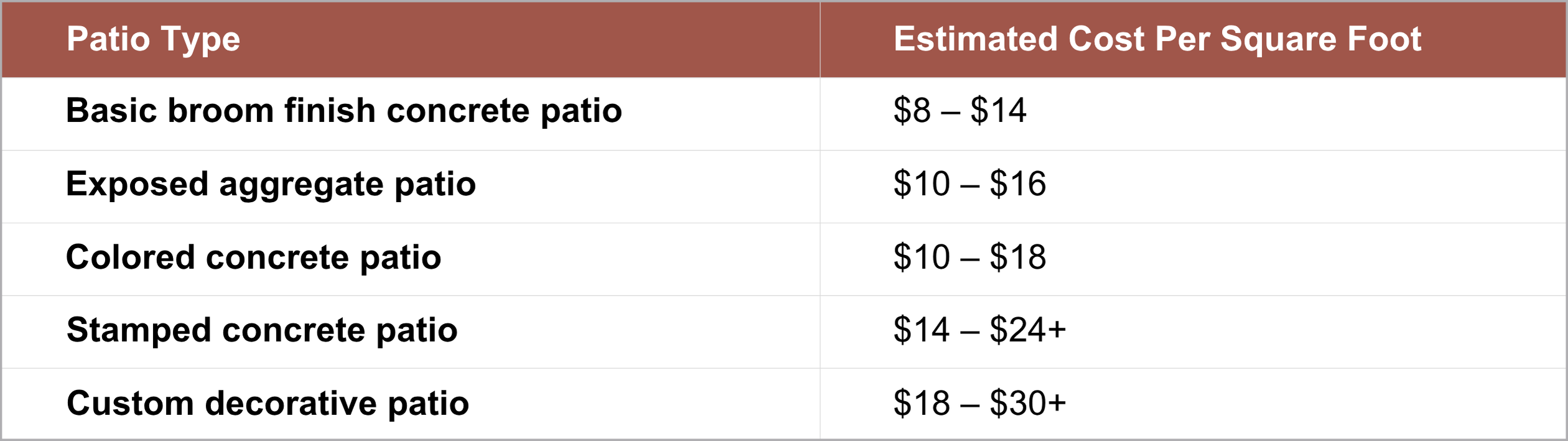
These ranges are general estimates. The actual cost depends on access, grading, demolition, reinforcement, design complexity, and total square footage.
A small, simple backyard patio may fall near the lower end of the range. A larger patio with curves, steps, drainage corrections, or a stamped finish will usually cost more.
What Affects Concrete Patio Pricing?
Concrete patio pricing is not based on square footage alone. Two patios with the same size can have very different costs depending on the condition of the property and the design the homeowner wants.
Patio Size and Layout
Size is one of the biggest cost factors. Larger patios require more concrete, more base material, more labor, and more finishing time.
Layout also matters. A simple square or rectangular patio is usually more efficient to install than a curved patio, multi-level layout, or patio with custom borders.
Site Preparation
Before concrete is poured, the area needs to be prepared correctly. This may include excavation, grading, base installation, and compaction.
Site preparation can cost more when:
- The yard has a steep slope
- Existing concrete needs to be removed
- Soil is soft or unstable
- Drainage needs to be corrected
- Equipment access is limited
Good preparation is one of the most important parts of the project. If the base is weak or uneven, the patio may crack, settle, or drain poorly over time.
Concrete Thickness
Most residential patios are poured at about 4 inches thick. In some cases, thicker concrete may be recommended if the patio will support heavy furniture, outdoor kitchens, fire features, or other added weight.
Reinforcement
Reinforcement helps improve strength and reduce movement-related cracking. Depending on the project, a contractor may recommend wire mesh, rebar, or fiber reinforcement.
Not every patio needs the same reinforcement approach. The right choice depends on the soil, patio size, and intended use.
Finish Type
Finish type has a major impact on cost. A broom finish is usually the most affordable option. Decorative finishes require more labor and materials.
Popular patio finishes include:
- Broom finish
- Smooth trowel finish where appropriate
- Exposed aggregate
- Colored concrete
- Stamped concrete
- Decorative borders
Homeowners who want a more customized look often choose stamped or colored concrete because it can complement the home’s exterior and landscape design.
Basic Concrete Patio vs Decorative Concrete Patio
Choosing between a basic patio and a decorative patio depends on your budget, design goals, and how visible the area is from the home.
Basic Concrete Patio
A basic concrete patio is a practical choice for homeowners who want a clean, durable outdoor surface without added design work. It works well for seating areas, grilling spaces, and simple backyard improvements.
A broom finish is common because it provides texture and slip resistance.
Decorative Concrete Patio
A decorative patio is a better fit when appearance is a major priority. Stamped and colored concrete can create the look of stone, brick, tile, or slate without using individual pavers.
For homeowners planning a more customized outdoor space, Top Tier Construction’s concrete patio services can help determine which finish fits the property, budget, and long-term use.
Stamped Concrete Patio Cost in Des Moines
Stamped concrete patios usually cost more than standard concrete because the process requires more detail. The surface is patterned before it fully sets, and color may be added to create a more natural or decorative appearance.
Common factors that affect stamped concrete pricing include:
- Pattern complexity
- Number of colors
- Patio size
- Border details
- Sealing requirements
- Site preparation
A simple stamped pattern may stay closer to the lower end of the decorative range. More detailed designs with multiple colors, borders, or custom layouts will cost more.
Homeowners who want a more finished outdoor space often choose stamped concrete services to create a patio that feels more connected to the home’s style and landscape.
Concrete Patio Cost by Size
While every project is different, patio size can help homeowners establish a realistic budget.
Typical ranges include:
- 10×10 patio: approximately $800–$2,400+
- 12×12 patio: approximately $1,150–$3,500+
- 15×15 patio: approximately $1,800–$5,400+
- 20×20 patio: approximately $3,200–$9,600+
Decorative finishes, demolition work, drainage corrections, and difficult site access can increase overall pricing.
Patio Demolition and Replacement Costs
If an old patio already exists, replacement will usually cost more than installing a patio on a prepared area.
Demolition may include:
- Breaking up old concrete
- Hauling away debris
- Regrading the area
- Rebuilding the base
- Correcting drainage problems
This work adds labor and disposal costs, but it is often necessary when the existing patio is cracked, uneven, or poorly installed.
If the surface has minor damage but the base remains stable, concrete repair services may be worth considering before moving forward with full replacement.
Concrete Patio Installation Timeline
Most residential concrete patio projects can be completed within several days, depending on weather, project size, and site conditions.
A typical timeline includes:
- Site preparation: 1–2 days
- Forming and base work: about 1 day
- Pouring and finishing: about 1 day
- Initial curing: several days before regular use
Decorative concrete projects may require additional finishing and sealing steps.
Patio Drainage and Grading Considerations
Drainage is one of the most important parts of patio planning. A patio should move water away from the home, not toward the foundation.
Poor drainage can lead to:
- Standing water
- Soil erosion
- Cracking
- Settlement
- Water accumulation near the foundation
A properly installed patio includes the correct slope and base preparation to help prevent these issues.
Concrete Patio Thickness and Strength
Most residential patios are installed at approximately 4 inches thick, which is sufficient for normal outdoor living spaces.
However, patios supporting heavier features such as outdoor kitchens, masonry fireplaces, or large structures may require additional thickness or reinforcement.
The right specifications should always be based on the intended use of the patio and site conditions.
Concrete Patio Finish Options
The finish affects both appearance and functionality.
Broom Finish
A broom finish is one of the most common patio finishes because it provides texture, durability, and slip resistance.
Exposed Aggregate
Exposed aggregate reveals the stone within the concrete, creating a decorative and textured appearance.
Colored Concrete
Colored concrete can help complement the home and landscaping while providing a more customized look.
Stamped Concrete
Stamped concrete replicates the appearance of stone, brick, slate, or tile while maintaining the durability of concrete.
Decorative Borders
Decorative borders can define the patio space and create a more finished appearance.
Concrete Patio vs Pavers
Many homeowners compare concrete patios and paver patios before making a final decision.
Concrete patios often offer:
- Lower upfront cost
- Easier maintenance
- Fewer weed issues
- Strong durability
Pavers offer:
- Flexible design options
- Easier individual repairs
- Distinct appearance
The right choice depends on budget, maintenance preferences, and design goals.
Maintenance Costs After Installation
Concrete patios require relatively little maintenance, but regular care helps maximize lifespan.
Recommended maintenance includes:
- Periodic cleaning
- Removing debris
- Addressing cracks early
- Resealing decorative concrete when needed
- Avoiding harsh chemicals
Stamped and colored patios typically benefit from periodic resealing to preserve appearance and protect the surface.
Common Mistakes Homeowners Make When Budgeting
Some of the most common budgeting mistakes include:
Only Comparing Square Foot Prices
Pricing alone does not reveal the quality of preparation, reinforcement, drainage work, or finishing practices.
Ignoring Drainage
Drainage problems can significantly shorten the lifespan of a patio.
Choosing a Finish Without Considering Maintenance
Decorative finishes may require additional upkeep compared to basic concrete surfaces.
Making the Patio Too Small
Many homeowners underestimate how much space they need once furniture, grills, and traffic flow are considered.
Not Planning for Future Features
Future additions such as pergolas, fire pits, walkways, or outdoor kitchens should be considered during the design stage.
Questions to Ask Before Getting a Patio Estimate
Before requesting an estimate, homeowners should consider:
- How many people will regularly use the patio?
- Will the patio support dining, entertaining, or cooking?
- Is a decorative finish important?
- Are there existing drainage concerns?
- Will the patio connect to sidewalks or other concrete features?
- Are future additions planned?
If the patio will connect to other exterior concrete surfaces, Top Tier Construction’s concrete sidewalk services can help create a more functional and cohesive layout.
Is a Concrete Patio Worth the Cost?
For many homeowners, a concrete patio is a worthwhile investment because it creates usable outdoor living space while requiring relatively low maintenance.
Concrete offers flexibility in both design and budget. It can be installed as a simple, functional surface or customized with decorative finishes that enhance the appearance of the property.
The best value comes from selecting the right size, finish, and installation approach for your specific goals and property conditions.
Planning Your Concrete Patio Project in Des Moines
Concrete patio cost in Des Moines, IA depends on much more than square footage. Site preparation, drainage, finish selection, patio size, and reinforcement all contribute to the final investment.
Top Tier Construction works with homeowners throughout the Des Moines area to design and install concrete patios that balance durability, functionality, and appearance.
If you are considering a new patio, replacing an existing surface, or comparing decorative concrete options, Top Tier Construction can evaluate your property, explain available options, and provide a detailed estimate tailored to your project goals.